From HFUnderground
(Difference between revisions)
|
|
| Line 5: |
Line 5: |
| | | | |
| | | | |
| - | {| class="wikitable" border="1" text-align="center" align="center" | + | {| class="wikitable" border="1" text-align="center" align="center" style="color:darkblue" |
| | ! Non DATA Signals | | ! Non DATA Signals |
| | |} | | |} |
| | | | |
| | | | |
| - | {| class="wikitable" border="1" text-align="center" align="center" | + | {| class="wikitable" border="1" text-align="center" align="center" style="color:darkblue" |
| | ! Communications Modes | | ! Communications Modes |
| | {| class="wikitable" border="1" text-align="center" align="center" | | {| class="wikitable" border="1" text-align="center" align="center" |
| Line 56: |
Line 56: |
| | |} | | |} |
| | | | |
| - | {| class="wikitable" border="1" text-align="center" align="center" | + | {| class="wikitable" border="1" text-align="center" align="center" style="color:darkblue" |
| | ! Non Communications Modes | | ! Non Communications Modes |
| | {| class="wikitable" border="1" text-align="center" align="center" | | {| class="wikitable" border="1" text-align="center" align="center" |
| Line 99: |
Line 99: |
| | Probably need to put a desription of what is meant by DATA Signals in this area. | | Probably need to put a desription of what is meant by DATA Signals in this area. |
| | | | |
| - | {| class="wikitable" border="1" text-align="center" align="center" | + | {| class="wikitable" border="1" text-align="center" align="center" style="color:darkred" |
| | ! DATA Signals | | ! DATA Signals |
| | |} | | |} |
| | | | |
| | | | |
| - | {| class="wikitable" border="1" text-align="center" align="center" | + | {| class="wikitable" border="1" text-align="center" align="center" style="color:darkred" |
| | ! FSK Modes | | ! FSK Modes |
| | {| class="wikitable" border="1" text-align="center" align="center" | | {| class="wikitable" border="1" text-align="center" align="center" |
Revision as of 03:40, 1 December 2014
Crude mock-up of the start of a signal identification section of the wiki.
Guidelines, goals, structure, and how to use described here.
Communications Modes
| Mode
| Frequency Range (kHz)
| Bandwidth (kHz)
| Shift (Hz)
| Number of Tones
| Key Features
| Sources
| Recording
| Spectrum Image
|
| AM
| All Frequencies in the HF Range
| Typically 2.6 to 10.0 kHz, can be wider or narrower
| Not Applicable
| Not Applicable
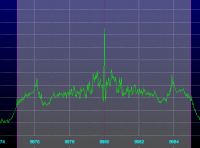
| Carrier present in center of signal, audio mirrored left and right of the carrier
| World wide
| AM recording link here
| 
|
| LSB
| All Frequencies in the HF Range
| Typically 2.4 to 3.0 kHz, can be wider or narrower
| Not Applicable
| Not Applicable
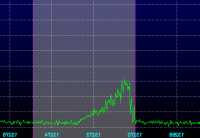
| No carrier present in Spectrum, audio typically bunched to towards the right (low frequency)
| World wide
| USB recording link here
| 
|
| USB
| All Frequencies in the HF Range
| Typically 2.4 to 3.0 kHz, can be wider or narrower
| Not Applicable
| Not Applicable
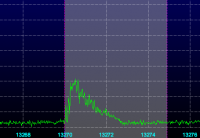
| No carrier present in Spectrum, audio typically bunched to towards the left (low frequency)
| World wide
| USB recording link here
| 
|
|
Non Communications Modes
| Mode
| Frequency Range (kHz)
| Bandwidth (kHz)
| Shift (Hz)
| Number of Tones
| Key Features
| Sources
| Recording
| Spectrum Image
|
| 16 x 64 Sounder (nickname, official name or designation not known)
| Below 4000 to above 30000 observed
| 3 kHz
| Not Applicable
| Not Applicable
| FMCW transmission, changes sweep rates in 16 steps, resulting in 16 different sounds per transmission, pilot tone precedes each rate change
| Unknown
| 16 x 64 sounder recording link here
|
|
| PLUTO radar (possible offical name, PLUTO II, suggested by open source documents)
| 8000 to 38000
| 3 to 40 kHz, depending on specific operating conditions
| Not Applicable
| Not Applicable
| FMCW transmission, presenting a wide signal equal to the swept (chirped) width, sweep rate creates a pulsed sound affect
| British Sovereing base of Akrotiri, Island of Cyprus
| PLUTO recording link here
|
|
|
Need to put some kind of break here, a line or something, to sep out the Non DATA from DATA
Probably need to put a desription of what is meant by DATA Signals in this area.
FSK Modes
| Mode
| Frequency Range (kHz)
| Bandwidth (kHz)
| Shift (Hz)
| Number of Tones
| Key Features
| Sources
| Recording
| Spectrum Image
|
| CIS 36-50, BEE, T-600
| All Frequencies in the HF Range
| 0.085 to 0.500 kHz (85 to 500 Hz depending on mode)
| 85, 125, 250, or 500, only one shift used at a time
| 2
| Appears as two lines on waterfall, seperated by the shift, normally encrypted
| Used by Russian or Russian supplied forces, a mode of the T-600 modem
| CIS 36-50 recording link here
|
|
| STANAG 4481 FSK
| All Frequencies in the HF Range
| 0.85 kHz (850 Hz)
| 850 Hz
| 2
| Appears as two lines on waterfall, seperated by the shift, normally encrypted
| Used by NATO forces world wide
| 4481 FSK recording link here
|
|
|


